"I'm not confused, I'm just well mixed." -- Robert Frost
All Kinds of Feelings: A Child's Emotional Literacy

"In the video, "Emotional Baby is Moved to Tears by Mom's Singing," we witness the power of emotion in even the youngest of babies. At only 10 months old, the baby's deep feelings spill over in the form of tears when he hears his mother's beautiful singing.
Learning about emotions like these is a long process and a big part of growing up. From an early age, we begin to name the feelings babies and toddlers are having. That makes you angry. Oh, you are so frustrated. What a happy baby! That is the beginning of a child's emotional literacy development, his growing ability to recognize, access and name his emotions. Then in school, he learns to sing, "If you're happy and you know it, clap your hands...if you're sad and you know it, shed a tear..." One feeling at a time, he learns to handle and express his feelings. And each child handles feelings in his own way.
I am reminded of a client, the parent of a kindergarten child who was hyper-emotional. When something beautiful happened, the child cried. Something exciting brought her to tears. With nervousness, her tears flowed forth. At first, her classmates ran to comfort her; to them, her tears meant she was hurt or sad and needed help. They soon came to know that wasn't necessarily the case; she was just emoting. Her example taught them all another piece to their literacy -- being just plain emotional. Crying doesn't always mean you are not OK." [ more ]
Learning about emotions like these is a long process and a big part of growing up. From an early age, we begin to name the feelings babies and toddlers are having. That makes you angry. Oh, you are so frustrated. What a happy baby! That is the beginning of a child's emotional literacy development, his growing ability to recognize, access and name his emotions. Then in school, he learns to sing, "If you're happy and you know it, clap your hands...if you're sad and you know it, shed a tear..." One feeling at a time, he learns to handle and express his feelings. And each child handles feelings in his own way.
I am reminded of a client, the parent of a kindergarten child who was hyper-emotional. When something beautiful happened, the child cried. Something exciting brought her to tears. With nervousness, her tears flowed forth. At first, her classmates ran to comfort her; to them, her tears meant she was hurt or sad and needed help. They soon came to know that wasn't necessarily the case; she was just emoting. Her example taught them all another piece to their literacy -- being just plain emotional. Crying doesn't always mean you are not OK." [ more ]
Reading Corner
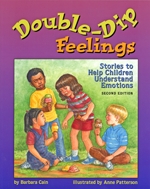
Title: Double-Dip Feelings: Stories to Help Children Understand Emotions, Second Edition
By: Barbara S. Cain, MSW Ages: 4-8
"Learning to cope with ambivalence is one of the greatest challenges in a child's emotional development. In the second edition of this delightful and engaging book, a series of familiar situations illustrate the common yet uncomfortable experience of having two contrasting feelings at the same time. The first day of school brings both pride and fear; the arrival of a new brother or sister can trigger both joy and sadness. These vignettes will help the young child recognize and understand the phenomenon of mixed feelings.
In an extensive afterword, psychologist Jane Annunziata offers children guidelines for responding to their conflicting feelings. She also provides parents with concrete suggestions for helping their growing children resolve their struggles with ambivalence on the journey toward emotional maturity." -- From the American Psychological Association/publisher's website
By: Barbara S. Cain, MSW Ages: 4-8
"Learning to cope with ambivalence is one of the greatest challenges in a child's emotional development. In the second edition of this delightful and engaging book, a series of familiar situations illustrate the common yet uncomfortable experience of having two contrasting feelings at the same time. The first day of school brings both pride and fear; the arrival of a new brother or sister can trigger both joy and sadness. These vignettes will help the young child recognize and understand the phenomenon of mixed feelings.
In an extensive afterword, psychologist Jane Annunziata offers children guidelines for responding to their conflicting feelings. She also provides parents with concrete suggestions for helping their growing children resolve their struggles with ambivalence on the journey toward emotional maturity." -- From the American Psychological Association/publisher's website
Recommended by Cubs Editors
Be the Change
Here's an article for parents to read and fortify themselves in their own feelings of ambivalence.
Perhaps after you've read the article, ask your child(ren) to draw a large ice cream cone with two dips on top. Ask them to think of a time when they had double dip feelings and have them put the two feelings in the circles. Then ask them to write or tell you about this time or draw a picture about it.
Perhaps after you've read the article, ask your child(ren) to draw a large ice cream cone with two dips on top. Ask them to think of a time when they had double dip feelings and have them put the two feelings in the circles. Then ask them to write or tell you about this time or draw a picture about it.