"Empathy is seeing with the eyes of another, listening with the ears of another and feeling with the heart of another." -- Alfred Adler
How Nurturing Babies Cultivates Empathy

"Everyone's interested in love! But I didn't realise just how important our earliest experiences are until I studied early development and was trained in observing babies. I spent two years visiting two babies on a weekly basis just watching them grow. It soon became pretty obvious that the way they were being handled and responded to had a big impact on how they developed. One mum seemed to enjoy responding to her baby most of the time and spent a lot of time playing and chatting with her; the other made negative comments about her baby, left him alone a lot, and when she was feeding him was doing something else like making a phone call. The end results were predictable." This article from Start Empathy shares insights into how nurturing infants can positively impact their social, emotional and psychological well-being later in life.
Reading Corner
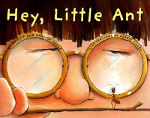
Title: THey, Little Ant
By: Phillip M. Hoose Ages: 3-7
"Based on a real-life experience the author had as he watched his toddler squishing ants one day, this book is as powerful a teaching tool as I've seen come along in a very long time. In this classic, a Kid threatens to squish the book's hero Ant and a clever dialogue ensues. Allowed to plead its case, the Ant explains to the boy that he, too, has a special reason for being. Through cleverly rhyming verse, set to musical notes if you'd rather sing it, the Ant tries to negotiate for its life, citing the "Golden Rule" to solidify its case. The beauty of this tale is that it ends with a dilemma: "what do you think that Kid should do?" Leaving it open-ended is a tremendous way to generate dialogue with children. It gives them the opportunity to think the problem through and offer problem-solving solutions; it serves to empower them by giving them a voice. " -- Amazon Reviewer
By: Phillip M. Hoose Ages: 3-7
"Based on a real-life experience the author had as he watched his toddler squishing ants one day, this book is as powerful a teaching tool as I've seen come along in a very long time. In this classic, a Kid threatens to squish the book's hero Ant and a clever dialogue ensues. Allowed to plead its case, the Ant explains to the boy that he, too, has a special reason for being. Through cleverly rhyming verse, set to musical notes if you'd rather sing it, the Ant tries to negotiate for its life, citing the "Golden Rule" to solidify its case. The beauty of this tale is that it ends with a dilemma: "what do you think that Kid should do?" Leaving it open-ended is a tremendous way to generate dialogue with children. It gives them the opportunity to think the problem through and offer problem-solving solutions; it serves to empower them by giving them a voice. " -- Amazon Reviewer
Recommended by Cubs Editors
Be the Change
Next time you see your child experiencing a strong emotion, whether positive or negative, step into their shoes for a moment and imagine how they are feeling. What could be the source of this emotion? Think of ways that you can you be supportive to them in that moment to show them you understand what they are experiencing.