"Each friend represents a world in us, a world possibly not born until they arrive, and it is only by this meeting that a new world is born." -- Anas Nin
How To Help Kids Make Friends: 10 Evidence-based Tips

"How do kids make friends? Newborn babies are born ready to socialize, and no wonder: Throughout our evolutionary history, the ability to make friends has been a crucial survival skill. But that doesn’t mean that marvelous good manners and irresistible charm will "just emerge" during your child’s development.
Decades of research suggests that parents play a big role in teaching children how to make friends. The most popular kids are prosocial—i.e., caring, sharing, and helpful. They also have strong verbal skills and know how to keep their selfish or aggressive impulses in check. Most of all, popular kids are good at interpersonal skills: empathy, perspective-taking, and moral reasoning. So it seems that making friends depends on skills that kids can develop with practice."
As children begin another new school year, we offer this article from Parenting Science, which offers evidence-based tips on how we can support our children to develop healthy new friendships with their classmates and other children through building their own capacity for empathy and compassion. [read article]
Decades of research suggests that parents play a big role in teaching children how to make friends. The most popular kids are prosocial—i.e., caring, sharing, and helpful. They also have strong verbal skills and know how to keep their selfish or aggressive impulses in check. Most of all, popular kids are good at interpersonal skills: empathy, perspective-taking, and moral reasoning. So it seems that making friends depends on skills that kids can develop with practice."
As children begin another new school year, we offer this article from Parenting Science, which offers evidence-based tips on how we can support our children to develop healthy new friendships with their classmates and other children through building their own capacity for empathy and compassion. [read article]
Reading Corner
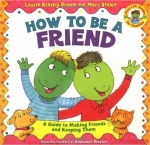
Title: How to Be a Friend: A Guide to Making Friends and Keeping Them
By: Laurie Krasny Brown
Ages: 3-8
Why? "I got this book for my 4-year-old daughter around this time last year when she had just started at a new school and was finding her feet in making new friendships. She loved the book from the first time we read it, and especially enjoyed reading about the different scenarios shared about day-to-day things that happen between friends. It offers cartoon style illustrations to accompany the mini stories about very real-life situations that friends face. The book helps children to put into practice what they are learning when they are making new friends, while understanding that kindness and compassion form the roots of their real friendships."
By: Laurie Krasny Brown
Ages: 3-8
Why? "I got this book for my 4-year-old daughter around this time last year when she had just started at a new school and was finding her feet in making new friendships. She loved the book from the first time we read it, and especially enjoyed reading about the different scenarios shared about day-to-day things that happen between friends. It offers cartoon style illustrations to accompany the mini stories about very real-life situations that friends face. The book helps children to put into practice what they are learning when they are making new friends, while understanding that kindness and compassion form the roots of their real friendships."
Recommended by Trishna Shah
Be the Change
According to the article, "An active listener is someone who makes it clear he is paying attention--by making appropriate eye contact, orienting the body in the direction of the speaker, remaining quiet, and making relevant verbal responses." As grown-ups, we often want our children to be active listeners, yet we fail to listen to them in this way when they speak to us. Next time you catch yourself in an otherwise busy moment where you might normally carry on doing what you're doing while secondarily listening to your child, pause for a moment and be an active listener by doing all of the above.